

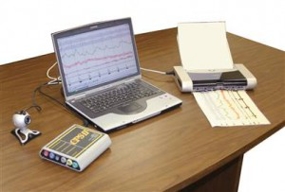
Criminal Sexual Conduct in Michigan ("CSC") is a very unique type of case. As a Michigan CSC Attorney, one question our office receives is "I'm innocent of CSC. Should I take a polygraph?"
To be clear at the outset – every person facing this question should get independent legal advice from an attorney specifically hired to advise them in their particular matter. This article is for general information and should NOT be taken as legal advice to anyone or something anyone should rely on in making such a decision.
In this article, we will discuss some of the key factors affecting this very important decision regarding polygraphs in CSC cases from the perspective of a Criminal Sexual Conduct Attorney from years of defending those accused of CSC in Michigan.
RELATED: Click here for our main page on Criminal Sexual Conduct and Sex Crimes.
The information in this article applies to all degrees of Criminal Sexual Conduct in Michigan, whether you're charged with First Degree Criminal Sexual Conduct, Second Degree Criminal Sexual Conduct, Third Degree Criminal Sexual Conduct, Fourth Degree Criminal Sexual Conduct, or other sex crimes. However, some CSC charges are better candidates for polygraph tests than others, since it can be difficult to design a relevant question set for certain types of accusations, such as Fourth Degree CSC, involving "sexual contact" as opposed to "sexual penetration" as in First Degree CSC.
Issues Surrounding Polygraph Tests
First and foremost, if you are facing Criminal Sexual Conduct charges in Michigan and you are considering the possibility of taking a polygraph (also called a "lie detector test"), you must know that this evidence is absolutely inadmissible at trial. Under Michigan law, polygraph results cannot be used in a criminal trial. That means that even in the best case scenario where you pass, you won't be able to use that in your defense against the charges in front of a Judge or Jury resulting in a final verdict of guilty or not guilty.
Neither the polygraph results, nor even the fact that you took or were willing to take a polygraph examination in the first place, can be heard by the Jury on your case, and if either a Prosecutor or Criminal Defense Attorney mentions the word "polygraph" at trial, your case is on the pathway to a mistrial - back to square one.
If you have been accused of CSC, the issue of taking a polygraph may arise in one of two ways: 1) you and your Michigan defense attorneymay want you to take one on your own; or 2) you may be offered one by law enforcement during their investigation of the case, or later on by Prosecutors after CSC charges have been filed.
RELATED: Do I have a right to a polygraph if I'm accused of Sexual Assault?
Let's take a look at the first scenario: "Should I take a private polygraph when I am facing CSC charges? I'm innocent, and I want this case to go away as quickly as possible." We definitely understand the reasoning behind this thought process. Many times, a Michigan defense attorney will encourage their clients to take a polygraph to try and prove their innocence. The theory is that even though the polygraph result is not admissible at trial, a passing result may be given to the Prosecution in hopes that they will recognize your innocence and drop the charges. But not so fast! That's typically not how it goes...
Let's imagine that you and your Michigan CSC lawyer have done some research and found a licensed polygraph examiner who is the best of the best. He or she is former law enforcement and is someone who is likely to be respected by the Prosecutors Office. You go and take the test, and you pass with flying colors. The polygraph examiner authors a special report detailing their findings and concluding that in their opinion, you were being truthful when you said that you did not commit the alleged act of Criminal Sexual Conduct. Note: the one advantage to taking a private polygraph is that if you fail, the result can most likely be kept private between you, your defense attorney, and the polygraph examiner.
RELATED: What is a "Rape Kit" in a CSC Case? Click here for our article on SANE examinations.
Your attorney takes an original signed copy of the polygraph examiner's report and delivers it to the Prosecutor. "See, my client is innocent. He passed the polygraph. Now would you please drop these charges?" But they don't drop the charges. The Prosecutor smiles, shakes their head and says "Well, we don't want to see an innocent person go to prison anymore than you do." They go on to say "Our office has a policy not to blindly accept private polygraphs from defense attorneys. If your client wants to take a polygraph with our approved law enforcement polygraph examiner, we'd be willing to consider it. We can set up the appointment anytime, just let me know..."
Because you already passed one polygraph, an inexperienced defense attorney may submit you for a polygraph examination with someone from the local Police Department (rare), Sheriff's Office, Michigan State Police, or US Secret Service. You show up for the exam, and the law enforcement officer administering it seems very friendly. The interview begins with casual talk before the test begins. They want to know all about your background. Then, the examiner asks some questions "just to get a feel for the case and see what the accusations are about." He asks about some of the facts of the case and even some things that have nothing to do with it. He makes you feel very comfortable about being honest.
Knowing that it has nothing to do with the actual questions, you happen to admit – agreeing with the examiner of course – that when you were 16, you dated a 15-year-old for about a week without realizing how young they were because they lied about their age, etc. [insert your own example here]. You and the examiner have a friendly discussion about how easy it is to get falsely accused of CSC and "caught up in a mess." When the polygraph exam begins, the examiner begins to read what sounds like your rights, just like a police interrogation. The examiner asks basically the exact same questions that the private polygraph examiner did...in addition to up to hours of additional questioning, which turns into a harsh interrogation at times. You feel like you're on "The First 48."
When it finally ends, the examiner says "Well, I'll disclose my findings to the Prosecutors Office and you'll get a copy of my report. I've got to review the data. Thanks for coming in." Great, all of this will be over soon, right? Fast forward and your Metro Detroit CSC Attorney receives a report from the government's polygraph examiner or Prosecutor's Office. A wave of shock falls over them as they read the conclusion of the report: "Deception indicated." What? How could this be? It was the same case, the same machine, the same accusation. But that's not all…
On top of the report with this awful conclusion, there's another piece of paper. It's a separate report regarding the "interview" that the examiner conducted with you. Must have something to do with all those other questions he was asking. It states that the polygraph examiner has reviewed the police reports and witness statements, and that you supposedly made statements that were inconsistent with other things you supposedly said before.
Overall, the government polygraph examiner believes that you are lying. If that's not enough, there's another sentence in there that reads "during the course of the interview, the client disclosed that he had previously had relations with a minor, which makes it sound as though you committed Criminal Sexual Conduct, 3rd Degree, MCL 750.520d – a 15 year felony. The last sentence reads "a copy of these documents has been sent to the Prosecutor's Office." What the heck happened here? How have you gone from essentially feeling like you've been proven innocent to suddenly becoming not only a "liar," but apparently a "child molester" who got away with it?
RELATED: Criminal Sexual Conduct 1st Degree - does "LIFE" really mean life in Prison?
The Prosecutor calls your Defense Attorney and (apologetically) informs them that they definitely won't be dismissing the charges, and in fact there won't be any plea deals at all in this case at this time. Although the polygraph results, or even the fact that a polygraph was given, won't be admissible at trial, the "statement" that was given during what you believed was just casual discussion is potentially admissible in court.
Even worse, there could even be a scenario where you're only under investigation for Criminal Sexual Conduct (i.e., no charges filed), you maintain your innocence, waive certain rights to help police with their investigation, voluntarily appear for a law enforcement polygraph, and end up being arrested ad the end of the exam! Walk-in voluntarily as a free man or woman when the government lacks probable cause to arrest and charge you, and don't walk out again. Again, this is not advice, but do we have your attention?
RELATED: DNA evidence in Criminal Sexual Conduct cases.
Obviously, you see the problem here. Even if you pass a polygraph, it's not going to help you in trial. Even if you pass with flying colors, the Prosecutor isn't under any obligation to do anything, unless they enter into a written contract to that effect – which they generally won't. Or worst case, something allegedly happens at that very polygraph you thought was your ticket to freedom that buttons-up their case against you.
You may find that Prosecutors are generally very reluctant to consider the polygraph results of an independent examiner without an exam conducted by an examiner currently employed by or working as an agent of law enforcement. And it shouldn't surprise you that those folks don't always reach the same conclusions as other examiners. As a result of this whole mess and the incompetence of the inexperienced Attorney, your situation can get much much worse and it could lead to you being wrongfully convicted of Criminal Sexual Conduct.
Of course, there are ways to prevent some of these problems. If the accused insists on polygraph as a solution, an experienced Michigan lawyer can approach the Prosecutor and offer to stipulate to a mutually agreeable polygraph examiner. But that still doesn't mean if you pass they must drop the CSC case. It still doesn't help you in trial. The examination can be audio and/or video recorded to prevent the mischaracterization of events. Your Attorney and the Prosecutor could potentially agree on a very specific question set, and that no statements during the exam are admissible at trial or other hearings.
These things can solve some of the problems, and it is true that polygraph examinations have indeed led to CSC charges being dropped under certain circumstances for our clients...
But by way of opinion, as a Detroit defense attorney, it seems that the very marginal benefit that there is to gain by taking a polygraph, weighed against the extreme risk if things go wrong, dictates that it may just be a waste at best and possibly even a dangerous risk at worst. So if you're considering taking a polygraph examination, it may be wise to get legal counsel immediately.
Get Defense for CSC Charges Today
At Prain Law, PLLC, our job is to keep you from being wrongly convicted of Criminal Sexual Conduct. As surprising as it may be, your chances of success can improve not just by the things your Defense Attorney actually does, but also just as much by the mistakes your Defense Attorney avoids making, like blindly sending you for a polygraph simply because you're innocent. Even if you decide to take a polygraph, you'll still need to remain focused on ultimately being found NOT GUILTY of Criminal Sexual Conduct.
Brian has a long history of awards and honors, and was most recently named one of the 21 Best Criminal Defense Lawyers in Detroit by Expertise.com, and has been named one of the DBusiness Top Lawyers.
If you are facing CSC charges in Michigan, call Prain Law, PLLC and speak to CSC Defense Attorney Brian J. Prain today at (248) 731-4543.